Photography
Canon DSLR shutter release from any switch contact
I’ve long wanted a TC-80N3 remote release for my EOS1D for the long exposure and intervalometer capability. Unfortunately a real Canon one is at least $150, and just out of principle I’m not paying that. A couple months ago I decided to just try one of the identical but rebranded ones off of eBay for $20. Ships from Hong Kong, Shenzen, etc. so it takes a while to get here, but it works, so I’m happy. I can never leave well enough alone though, so I took it apart and added a jack so I can hook anything with a switch contact to my camera and let it take a picture.
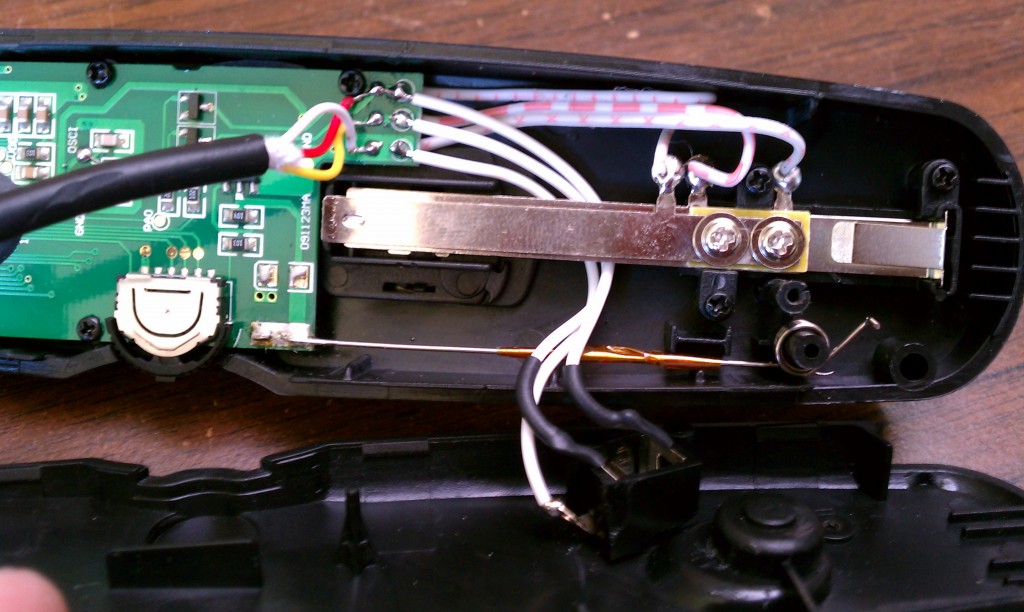
It’s pretty straightforward, there’s three metal contacts. The lowest one is ground, the next one is prefocus, and the last one is the shutter release. The signals are active low. I wired the three to a headphone jack on the bottom of the remote. To test it out I bought a ten dollar motion sensing security light and took out the motion sensor, then wired the output of the sensor to a 120VAC relay. The relay contacts trigger the shutter whenever the motion sensor sees anything.
You can use anything with a switch contact to trigger the camera, just remember that it’s not protected. If you mess up, you can easily fry your camera. Look for “dry” contacts if you are unsure. Canon DSLRs might allow for transistor pull-downs, but I haven’t tried that. It’s easier to just create an isolated contact through a relay for the safety of your camera.
Flatbed scanner panoramic camera
I’ve always loved panoramic pictures, especially when they’re printed up big. I’m not new to panoramics, as I’ve done quite a few stitched sequences, as well as true panoramic film photography. A while back I was wondering if I could repurpose the scanning head part of a scanner into a rotating head panoramic camera. After an initial trial with mediocre results, I did some digging and found out that people have made these before. There’s quite a few issues though: fitting a new lens, an IR filter, the proper speed rotating part, etc. An added difficulty with flatbed scanners is the scanning head scans over a white strip before every scan to calibrate the sensor, so if you don’t have something white for the scan head to look at right at the beginning of the scan, you get some really goofy color stripes. Sheet feed scanners aren’t supposed to do this, so I tried one of those but quickly tired of fooling all of the little switches. It always thinks there’s a paper jam.
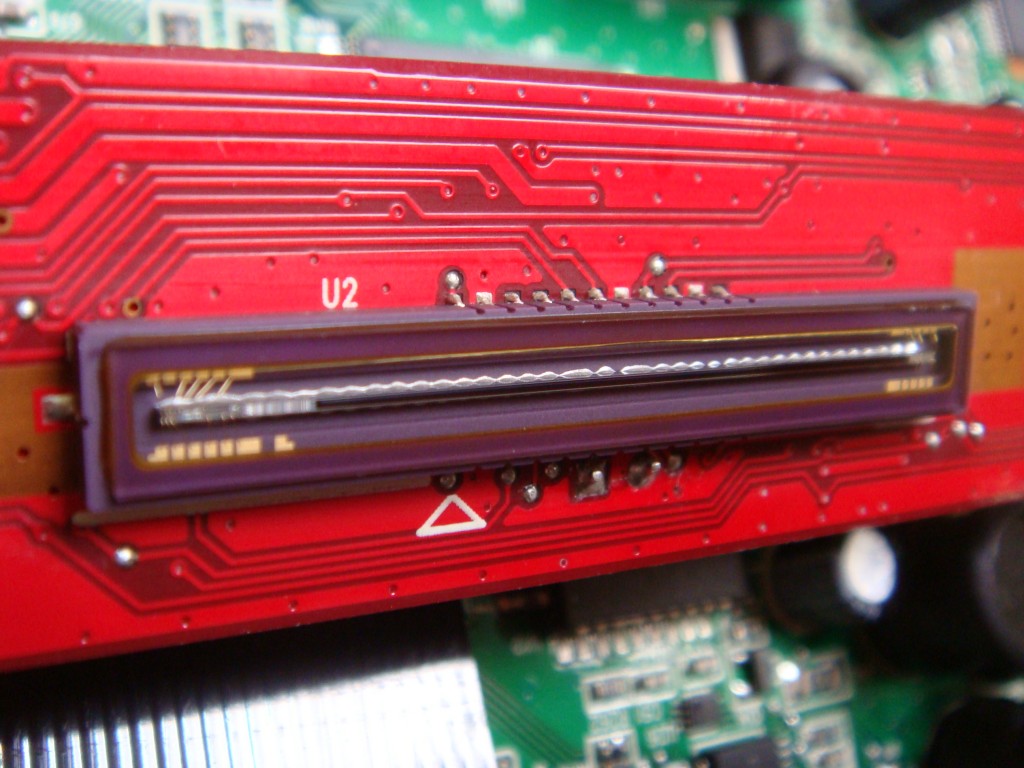
The scan head sensor is actually pretty cool, and by definition it’s a line scan camera. It would still be cool to set it up as a line scan camera to play with.
After seeing this rig at HAD, I’m convinced I’m wasting my time. Moving forward I will be designing a stepper-driven tripod mount for my camera and use stitching software instead. If anybody has any suggestions on good software to try let me know. I’ve been using Panorama Maker or whatever the Nikon bundled program was called. It just doesn’t always do a very good job, even with the special mount I made that’s supposed to eliminate parallax. I get a lot of blurring at the upper and lower edge stitches. I would also like to experiment with multi-row so I can use longer lenses.
Modifying a digital camera for infrared (IR) photography
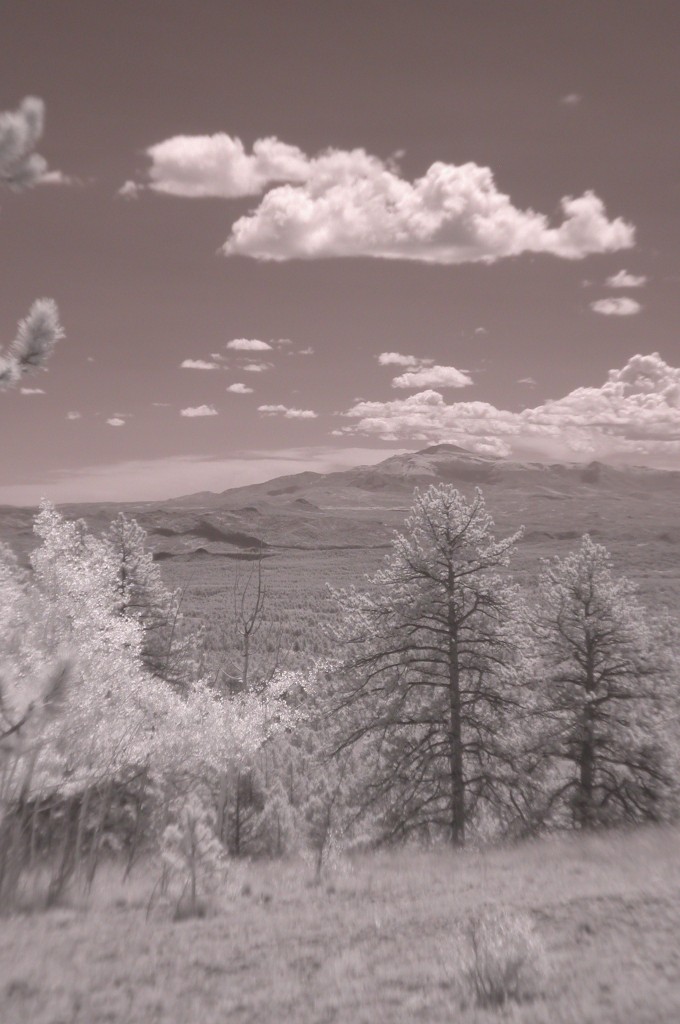
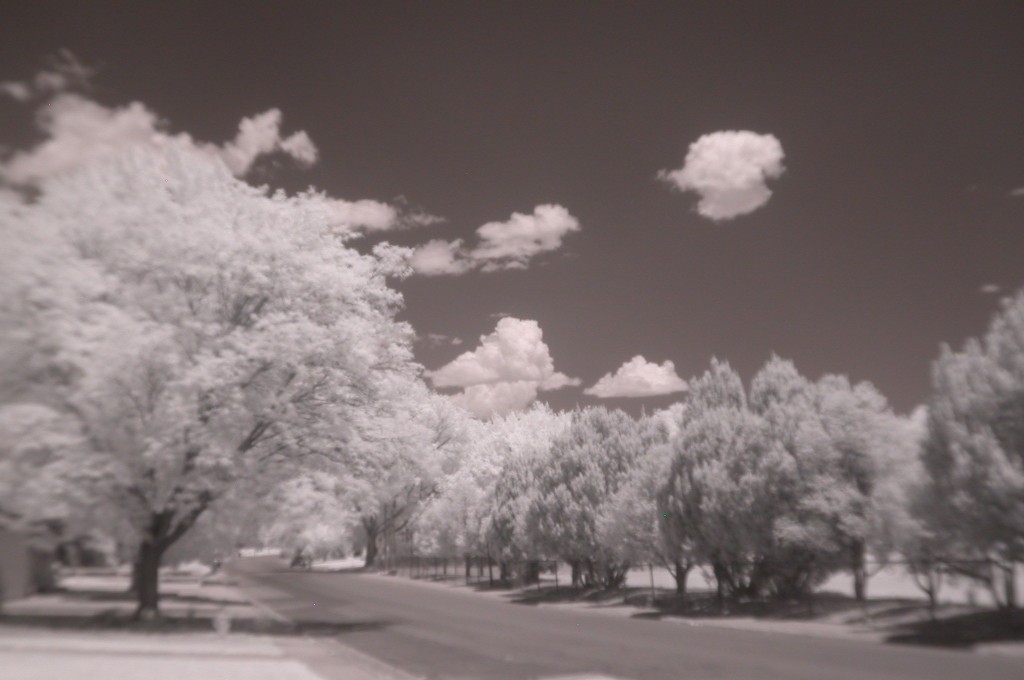
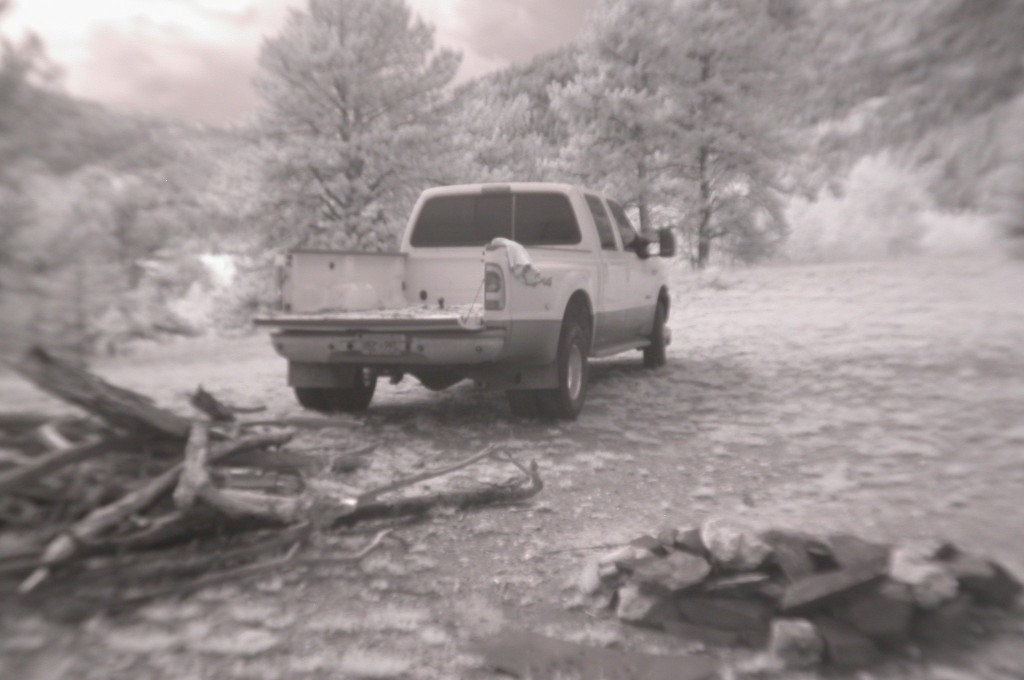
I modified an older Nikon digital camera that was destined for the trash can to take pictures in infrared. The effect is pretty cool, as the sky shows up really dark, clouds really bright, trees turn out white and alot of colors such as shirt patterns just disappear. It’s rather ethereal, and fun to experiment.
The CCD of a digital camera is usually protected by a piece of glass that is coated to reject IR, because the sensitivity of the CCD is high enough to infrared that it would make your everyday pictures look a little funny. Simply removing this piece of glass isn’t enough though, as by removing the filter, the effective distance between the CCD and lens group changes. This will mess up your focus. So you have to either buy a custom-made piece of replacement glass, or find a way to move the CCD closer to the lens group. Actually, on my camera I found a way to move the lens closer to the CCD and still retain autofocus and zoom capability. There are quite a few different cameras that can be modified to do this, and a quick google search will get you started if you don’t already have one in mind.
The only other piece of the puzzle is an IR-pass filter. This is because you still have to block out the visible light to get pictures in just infrared. IR-pass filters will look totally black. You can get filters which are sensitive to different wavelengths of IR, but those can be a little expensive. The cheap method that I found was to use a piece of exposed film. If you have an old film leader that’s been exposed and developed, it will be transparent to IR and mostly block visible light. It’s not perfect, but it sure is cheap and gets you started.
Here’s a few shots in infrared. They’re a bit fuzzy around the edges because my film filter doesn’t lay completely flat against the lens. Need to work on that someday.
In this shot the shirt draped across the back of my truck is actually red and black.
Horizont: a true panoramic camera
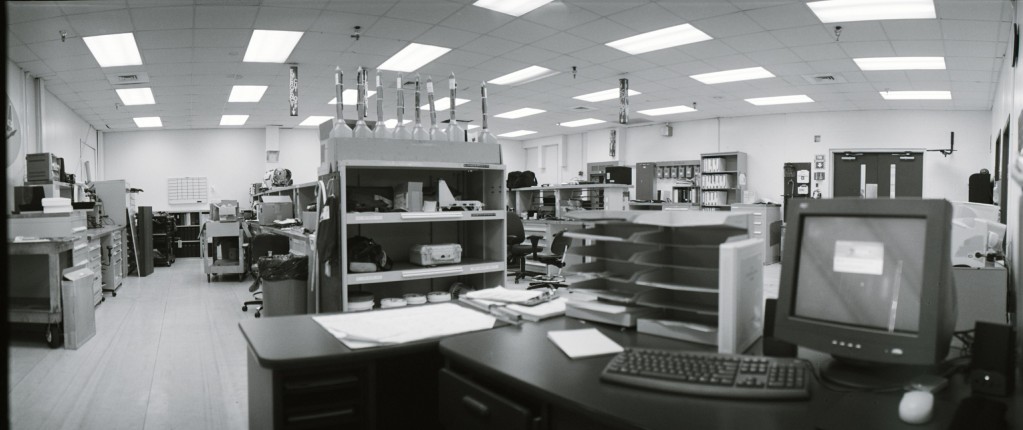
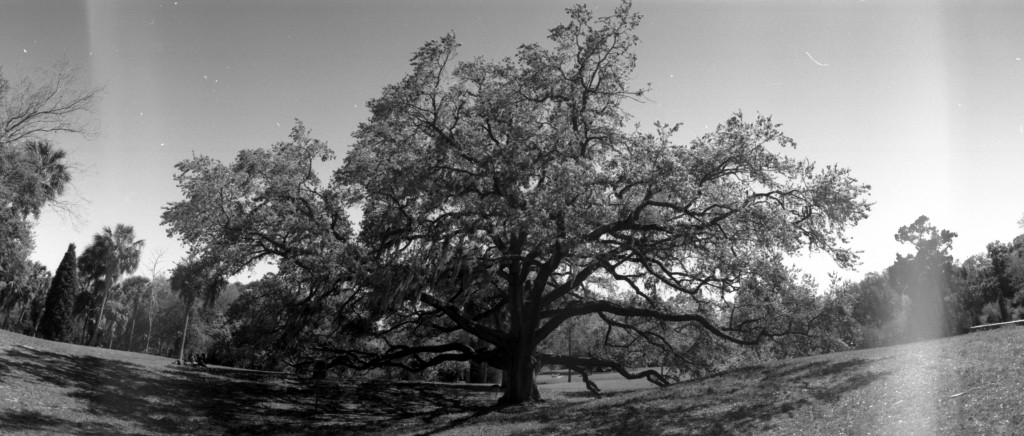
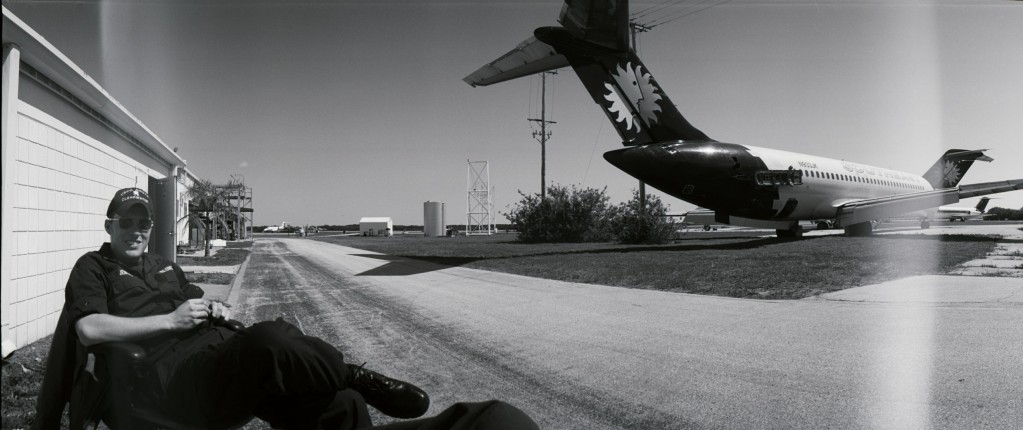
 I have an old Russian panoramic camera that my grandfather gave me called the Horizont. It takes real panoramic pictures, not the cropped variety that drops the little shades in front of the top and bottom edges of the film. It actually scans through something like 120 degrees. The lens rotates on an axis, and the film is wound around the backside of the rotating lens assembly where there is a variable size opening which acts as a shutter. The pictures produced on the film are almost twice as wide as a normal exposure.
I’ve taken quite a few pictures with this camera, but it has a pesky light leak and finding someone that can actually develop and print this film makes shooting with this camera a little tough. Plus it’s heavy. I’ve since moved on to digital stitching software and a special tripod mount for my camera that gives me alot more flexibility. Here are a few of my Horizont adventures though.
Other Stuff
Recent Posts
Archives
- May 2019 (2)
- April 2017 (3)
- October 2015 (1)
- May 2015 (1)
- March 2014 (2)
- December 2013 (1)
- July 2013 (1)
- November 2012 (1)
- October 2012 (4)
- September 2012 (1)
- August 2012 (3)
- June 2012 (1)
- March 2012 (1)
- February 2012 (1)
- January 2012 (1)
- October 2011 (3)
- July 2011 (1)
- June 2011 (3)
- May 2011 (2)
- April 2011 (1)
- December 2010 (1)
- August 2010 (1)
- July 2010 (3)
- April 2010 (2)
- March 2010 (2)
- January 2010 (2)
- December 2009 (2)
- October 2009 (2)
- September 2009 (1)
- August 2009 (15)